Freshwater abundance does not necessarily guarantee water security – lessons from the Faroe Islands
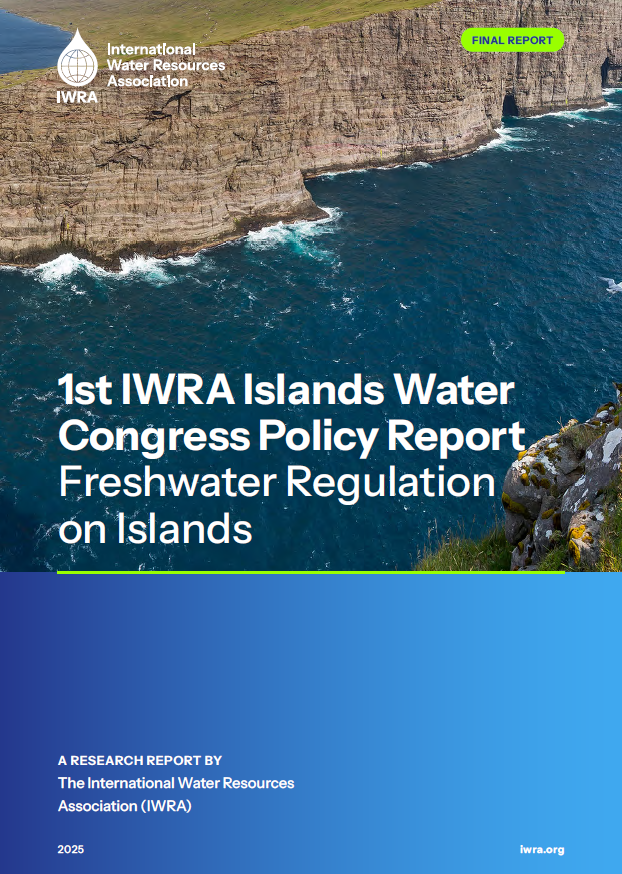
The Policy Report from the 1st Islands Water Congress, held in the Faroe Islands in 2024, is now available. The central message is clear: water security depends not just on availability, but on how freshwater is managed and regulated.
What is the Islands Water Congress?
The 1st IWRA Islands Water Congress took place in Tórshavn, Faroe Islands, from 4–6 September 2024, co-hosted by the Faroese Geological Survey (Jarðfeingi), under the theme “Freshwater and Islands: Governance, Collaboration and Innovation.”
Bringing together nearly 200 experts, policymakers, and island representatives from 40 countries, the Congress created a dynamic space to share knowledge and strengthen water governance across island contexts.
Alongside the Policy Report, the Final Report is also available to read! Click the button below to find out more.
Key findings and recommendations
The Policy Report translates the inaugural Islands Congress discussions into practical insights, showing how islands are already addressing complex water challenges and providing recommendations going forward.
Balancing energy and ecosystems in the context of hydropower
Hydropower plays an important role in many island economies, but balancing energy needs with water and ecosystem management remains complex. The following case studies highlight different approaches address this challenge:
- Jamaica has a single authority overseeing water use
- Fiji combines public oversight with private investment, requiring Environmental Impact Assessments
Water governance: beyond infrastructure
Water governance on islands also goes beyond infrastructure: it must reflect local contexts, connect different stakeholders, and support the communities that depend on water.
- Hawai‘i, USA embeds Indigenous knowledge and community rights in water management
- Malta coordinates across multiple agencies to turn complexity into action
- Nosy Mitsio, Madagascar demonstrates strong community-led systems
- Martinique uses modelling to balance competing water needs
- Caribbean (CWUIC) applies insurance to strengthen disaster resilience
How to manage groundwater with limited data
Many island communities depend on groundwater as their main source of freshwater. However, groundwater is increasingly under pressure from over-extraction and saltwater intrusion, challenges exacerbated by limited data and monitoring capacity.
The report highlights case studies showing how groundwater can be managed with limited data:
- Iceland links groundwater and geothermal management to ensure reliable supply
- Maldives combines conservative use with community-led monitoring
- Prince Edward Island, Canada blends citizen science with advanced research
- Fiji regulates extraction through stronger institutional oversight