Water Security
Global Water Security Issues Paper Series
There is an urgent need to conduct research on emerging and future global water security issues in the context of the Sustainable Development Goals. To document relevant research on water security issues, UNESCO Headquarters and UNESCO i-WSSM (International Centre for Water Security and Sustainable Management) are co-publishing the Global Water Security Issues (GWSI) Paper Series. IWRA is assisting with the GWSI Paper Series publication, including editing and peer review services by IWRA.
Given the complexity and range of the topic of water security, a different theme is selected for each issue. The themes for Issues with contributions from IWRA include the following:
- Water Reuse within a Circular Economy Context, available here.
- The Role of Sound Groundwater Resources Management and Governance to Achieve Water Security, available here.
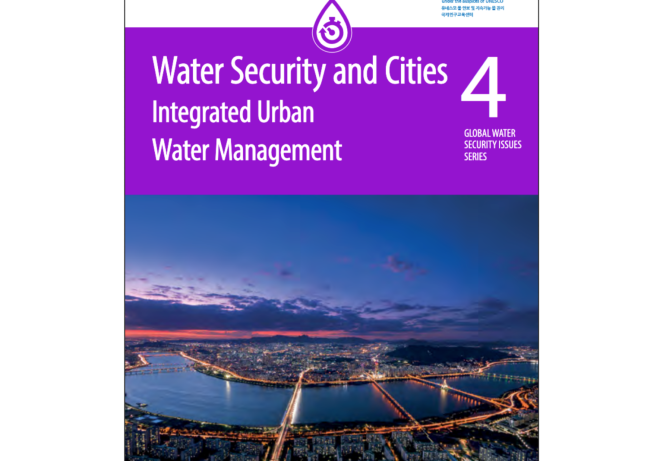
- Water Security and Cities – Integrated Urban Water Management, available here.
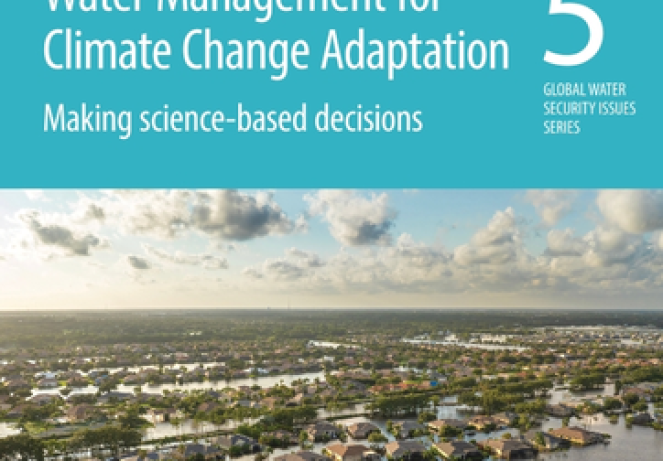
- Water management for climate change adaptation: making science-based decisions, available here.
Two additional issues are in production, one with the theme ‘Biodiversity Protection and Water Security’, and one with the theme ‘Water and Gender: Towards women’s equal rights and opportunities’

Access the reports
Background
Water security could be narrowly defined as a measure of the reliability and availability of water supplies needed to meet human demands. However, this definition is insufficient as it excludes the broad range of issues and complexities inherent in assessing water security. The age-old approach of locating and developing water supplies to meet human demands is being replaced with the reality that human demands must be managed and that accessing water supplies must be done in a manner that includes consideration for biodiversity as well as human needs and wants.
Water security therefore encompasses aspects of science, planning, management, infrastructure, and risk assessment pertaining to water quality and quantity on a watershed and/or aquifer scale. Since water is inter-connected with human health and wellness, food supplies, energy supplies, the economic viability of industry, as well as sustained biodiversity, the challenges of assessing water security become apparent. Addressing these challenges frequently includes addressing trans-boundary issues, equity considerations and competing values. Mitigating risks to water security includes waste management practices to ensure the protection of water quality and other measures to protect water quantity characteristics, such as seasonal flow rates in a river for example.
In its 2013 report, Water Security & the Global Water Agenda, UN-Water defines water security as “the capacity of a population to safeguard sustainable access to adequate quantities of acceptable quality water for sustaining livelihoods, human well-being, and socio-economic development, for ensuring protection against water-borne pollution and water-related disasters, and for preserving ecosystems in a climate of peace and political stability”. IWRA’s working definition for water security is that it entails securing a safe and reliable water supply for people and the environment, now and in the future.
New challenges to water security are emerging since climate change is manifesting through the water cycle, resulting in dramatic changes in precipitation patterns on local to continental scales.
The United Nations Educational, Scientific and Cultural Organization’s (UNESCO) International Hydrology Programme (IHP) program plan for 2022-2029 has placed an emphasis on water security, which is consistent with UNESCO’s eight-year Medium-term Strategy (2022-2029). According to the World Bank, “water is crucial in determining whether the world will achieve the sustainable development goals”